
Angels and Demons
Stepping outside of heaven and hell to heal the wound of belonging

“Anger and tenderness: my selves. And now
I can believe they breathe in me
as angels, not polarities.
Anger and tenderness: the spider’s genius
to spin and weave in the same action
from her own body, anywhere --
even from a broken web.”
– Integrity, by Adrienne Rich
I was recently reading the advice column “Why Tho” in The Oregonian by Lizzy Acker. A parent wrote in, asking for advice about their child’s birthday party:
Dear Lizzy,
My son is in third grade, and his birthday is coming up. He’s told me he wants to invite his whole class to his party (at a park) except for one kid.
This kid is a menace, if I am honest. He breaks things in class and yells and hits. He is actually quite mean to my son. I want to respect my son’s wishes here, but is it fair to invite everyone except him?
To Exclude or Not to Exclude
Lizzy Acker wrote back that it is not okay to invite the entire class except one kid and advised to either invite everyone or just a handful of close friends. Naturally, hundreds of comments came flooding in from parents who vehemently disagreed, writing that bullies should not be invited to anything— children should not have to sacrifice their feelings and safety for another kid; inviting the bully would be codependent and lacking boundaries— and we are letting bullies off the hook and enabling their behavior by including them in anything—
All said about an 8-year-old child.
I was struck at how these adults were demonizing this child— misusing therapy speak to pathologize him as if he is an adult— characterizing him as an abuser who could hurt other children (while seemingly having the power to render the adults helpless). And when other people tried to humanize the child, bring curiosity to his situation or developmental needs, these parents stood their ground behind the lines in the sand that read: we don’t care, he’s not our responsibility.
James Baldwin came to mind.
James Baldwin famously wrote, “The children are always ours, every single one of them, all over the globe; and I am beginning to suspect that whoever is incapable of recognizing this may be incapable of morality.”
And “Love has never been a popular movement. And no one’s ever wanted, really, to be free. The world is held together, really it is held together, by the love and the passion of a very few people.”
And maybe a lesser-known quote: “I’ve seen what white people have done to the world. I’ve seen what white people have done to their children. To gain the world they had lost something. They lost the ability to love their own children.”
These words circle inside of me, guiding me like a bird compass, pointing towards something beyond the trees.
This is the world we have created. A world without kinship, village, or connection. A world where some children are just bad and should be ostracized… where some people are just bad and should be ostracized. Where badness is banished into not our problem. Trapped in a polarized world of heaven and hell, angels and demons.
As I read through people’s responses, I recalled memories of being bullied throughout grade school. My first friend was my bully for many years, and I was excluded and made fun of at every grade school I went to (which was a lot). I became cool in high school, which also coincided with becoming a bad kid. I skipped classes, routinely got suspended, violated uniform policy over and over again (tucking in your shirt is uncool, okay!) I was ostracized by my friend’s mothers who called me a whore for wearing red lipstick, telling their kids I was emotionally disturbed and that they shouldn’t hang around me. And at home? I was being abused and terrorized by my father, something that had been happening my entire life.
Did my friend’s parents know this? Probably. It was a circulated secret amongst the teachers. Sometimes I could hear whispers in the hallway: she comes from a bad home. But most adults didn’t do anything about it. They reacted to my bad behavior with judgement and isolation. I was bad everywhere I went. I would attempt suicide 5 times before I turned 18.
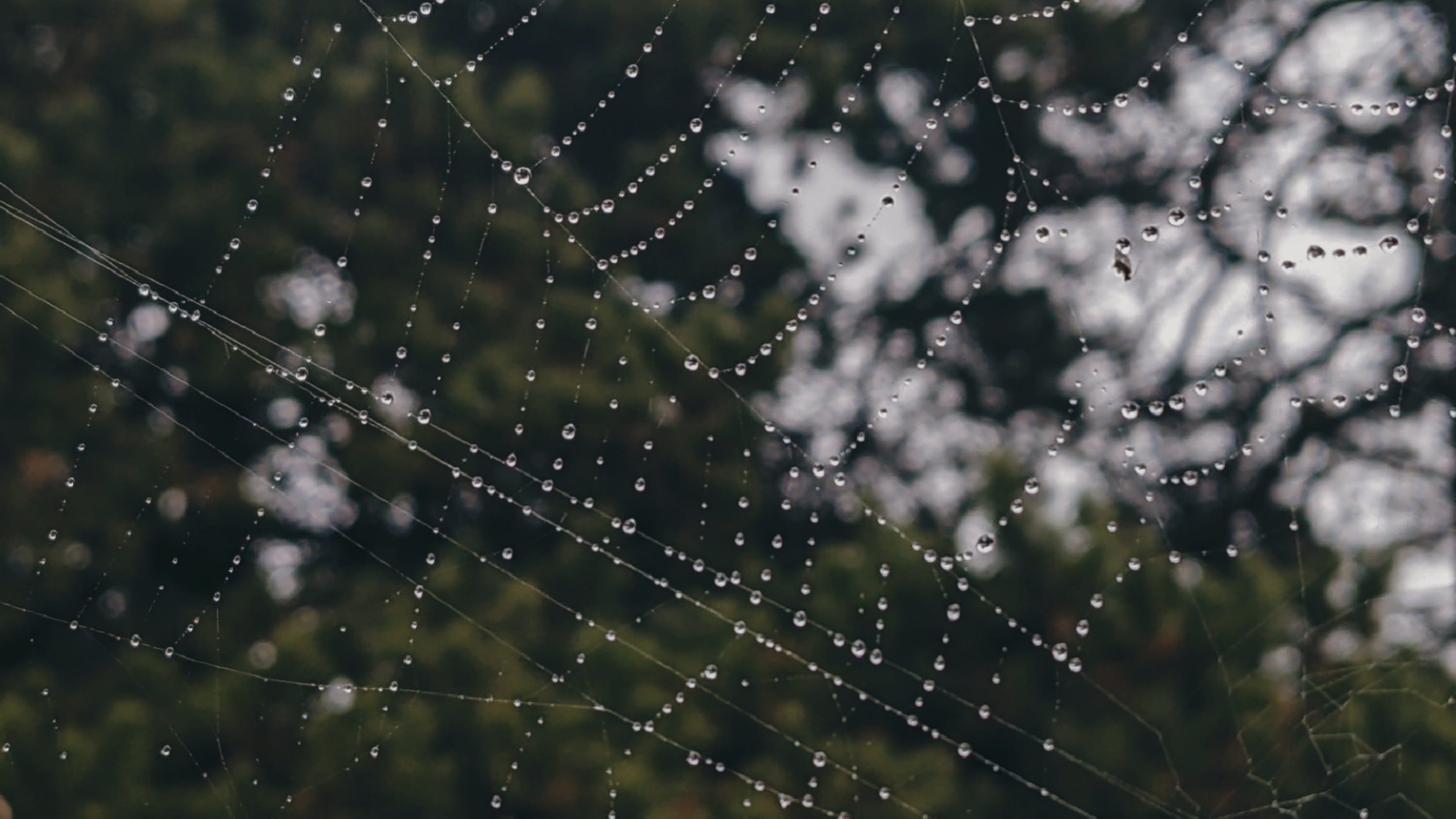
As I was reading and remembering, I could feel the woundedness inside the responses of these parents. I could almost hear their stories: how they were forced to tolerate harm as a kid; how they weren’t protected by their own parents; how these experiences replicated cycles of abuse they in turn, had to survive. I could imagine the undercurrents of these stories: how they had to survive through the desperation of being good; sensing a shame I knew by name, matching wounds, swollen inside of them, too…
Swimming through the streams of a shared ocean; resting somewhere deeper, where it’s harder to breath…
The world has been carved into pieces by the sharp knife of hierarchy— a wound that reverberates as the illusion of separation. This is the truth James Baldwin is pointing to: we have been severed from the earth, plants, and animals. We have been severed from each other through race, class, gender, and ability. We have been severed from humanizing our own children. We have been severed from our hearts.
Disconnected from the wider web of relations, we live inside our minds. In this head space, everyone is either above us or below us. Good or bad. Right or wrong. When we live inside our heads, we become disconnected from dialogue and relationships that challenge us to go deeper and see with more complexity. It’s no wonder how easily we assign the labels of good and bad to our children. To their families. To the neighborhoods they grow up in. To each other. We have created theology from our wounds. Our meaning of the world comes from the patterns mapped by our triggers.
One of the greatest gifts Francis Weller’s work has given me is his teachings on how to become a mature adult, one who is expansive and rooted. Avoiding grief hardens people. We become reactive, stuck inside our complexes and triggers as our compassion, ability to extend grace, and patience atrophy. We become closed off to joy and to life itself, pacing a world defined by trauma. Martín Prechtel wrote that “all war is unmetabolized grief,” which is to say, undigested grief turns into violence, and that violence is turned both inwards and outwards.
When I am stuck in my complexes, I cannot clearly see the ways in which I am harmful or acting outside my values. As a survivor of childhood abuse, I am often caught in the pendulum between fawning and fighting— taking accountability for things that weren’t my fault and deflecting when I needed to take responsibility— between demonizing myself and clinging to the idea that I am always the one being wronged— and these polarities feed each other. One of the costs of this closed feedback loop is not being able to hear genuine feedback. Another cost of this binary is mistaking compassion with the fear that we might be fawning.
When we’re in wounded mind, humanizing people often feels dangerous, like we’re “letting people off the hook” by bringing understanding and compassion into the picture. Like, if we are not constantly vigilant and categorizing the good and the bad, we will allow abuse to happen… just like what happened when we were kids.
But understanding the root cause of a situation or a person’s behavior is not the same thing as making excuses for the situation or behavior. Do people use this kind of nuance to enable harm and abuse? Yes. Does that mean understanding the deeper currents of a situation or behavior is inherently making excuses? No. Harm and abuse should not be passively tolerated or tip-toed around but shunning and shaming should be reserved for severe cases and should never apply to children.
Being able to respond to conflict and harm requires us to step into our mature adult presence— the presence that can meet people at the root and guide ourselves and each other back towards community and belonging. This orientation requires a strong discernment process. Being able to discern between hurt feelings, harm, abuse, and the severe cases requires a pathway in the psyche that returns us to our adult presence when we are triggered and activated.
This pathway is forged through the practice of grief tending. Grief expands what the psyche can hold because grief is a dynamic part of the human experience that returns us to deeper purpose, gratitude, and love. Grieving allows energy to move through us rather than our pain determining about what’s possible. And even more potently, grieving with community for the harm we’ve caused and the harm that has happened to us releases us from the binary of good and bad, orienting us back towards our shared humanity.
The point of humanizing people is not to “let people off the hook.” The point of humanization is to grow relationships from the world of soul. The point of humanization is to be in relationship with our own demons so we can learn to recognize when we are demonizing others and ourselves.
As parents and caretakers of children, we have the power to teach a different story about the world and humanity. How would a child’s heart space grow if we taught them a different story about relationship and belonging? If they had an adult beside them (who will eventually transform into the voice inside them), navigating the undercurrents of a situation together— demonstrating curiosity about the root causes of someone’s behavior, like turning over a stone to see what’s underneath… and helping the child respond from that place, and not from their initial hurt?
How would both the birthday kid and the bully be transformed if the adults in the class got together to support both children? How would our communities grow into a house of belonging if we taught our children that no one is disposable, no child is bad, and we practiced the skills needed to navigate the complicated web of conflict?
How could these new stories heal us, too?
This is the compass for navigating our way through the polycrisis and community conflict. Children explicitly need this guidance, and as adults, this is our responsibility to the children. This is the work to become an elder and a well-ancestor— and that work is now.
These visions spin inside of me, like a spider building a thousand webs into the future.
Compassion grows from seeing ourselves in everyone we meet. Remembering / never forgetting when that thing was hard for us, too. Remembering how it feels in our body when we struggle to be our best selves, giving touch to those tender parts, and offering that tenderness to others. When no part of me is exiled, people are no longer disposable. My compassion is a web spun from every part of me. Compassion, grace, and patience are practices we must spin again and again, recreating it, growing it— and over time— building a different kind of house of god.
A ritual offering to support this work:
I have been practicing a writing ritual to open up my heart space. Every morning with my first cup of coffee I write using the prompt my heart… and I write for 6 minutes without lifting my pen. I usually light a candle or burn some incense during this ritual. This practice is most potent over time. See what shifts in you after a month of writing from the heart💗
Love this thoughtful piece and I shall endeavour to take up your ritual. It feels more doable to me than still meditation
Bullies tend to be louder than the abused child.
What is an actually concrete way of handling this?
Especially if the child is a bully due to his home life….
Most parents don’t want to be told how to parent.
And most likely this is a parent problem that needs to be fixed/adjusted rather than the kid.
Sure we should deal with bullies otherwise we end up with Trumps and Netanyahus…..
But too these men were given everything on a silver platter.
We allowed these bullies and I don’t believe elders could have changed that.
Sometimes kids are raised as bullies specifically to have power over others.
It’s not always harm, sometimes it’s intentional pain and power over others. And in that case should we show that Child/family empathy or should we call them out and ostracize them before the bullying gets out of control as we can currently see on the world stage.
We also can’t forget that our world loves to support bullies as they maintain power and money. Better to be on their side than out in the cold…on the losing side. (Of course that’s not my desire it’s just what I am currently observing.)
Exactly what you said our world is held together by the love, and passion of a few not the many.
Thanks for the article and the tip on the 6 minute writing, I’ll give it a try.